What Your Absence Data Isn't Telling You



Absence is usually the only metric that a HR team has, to measure the impact of caring responsibilities. Someone's off, it gets logged, and that becomes the measure of the problem.
But 1 in 5 employees are providing unpaid care for an adult right now, and most of them are still turning up to work.
Many people taking on caring responsibilities don't identify as carers:
- "I'm just their daughter/partner/friend."
- "They don't live with me."
- "It's only temporary."
- "I don't do medical tasks."
But your relationship with, or your proximity to, someone needing care doesn’t change the responsibility you’ve taken on. Even short-term care requires energy, planning and sacrifice - and caring extends far beyond clinical duties: it’s about presence, and support.
When people don't recognise themselves as carers, they do not ask for support - so HR has no way of knowing they need it.
The workforce is ageing - our biggest employee demographic is now 40+ - and we're supporting more adult dependents than children. Absence figures don't come close to showing what that actually costs a business.
About KareHero
KareHero is the UK's first and only fully-comprehensive adult caregiver support service, helping businesses to offer legal, financial and care support as an employee benefit. We support your employees through the entire care lifecycle of a loved one.
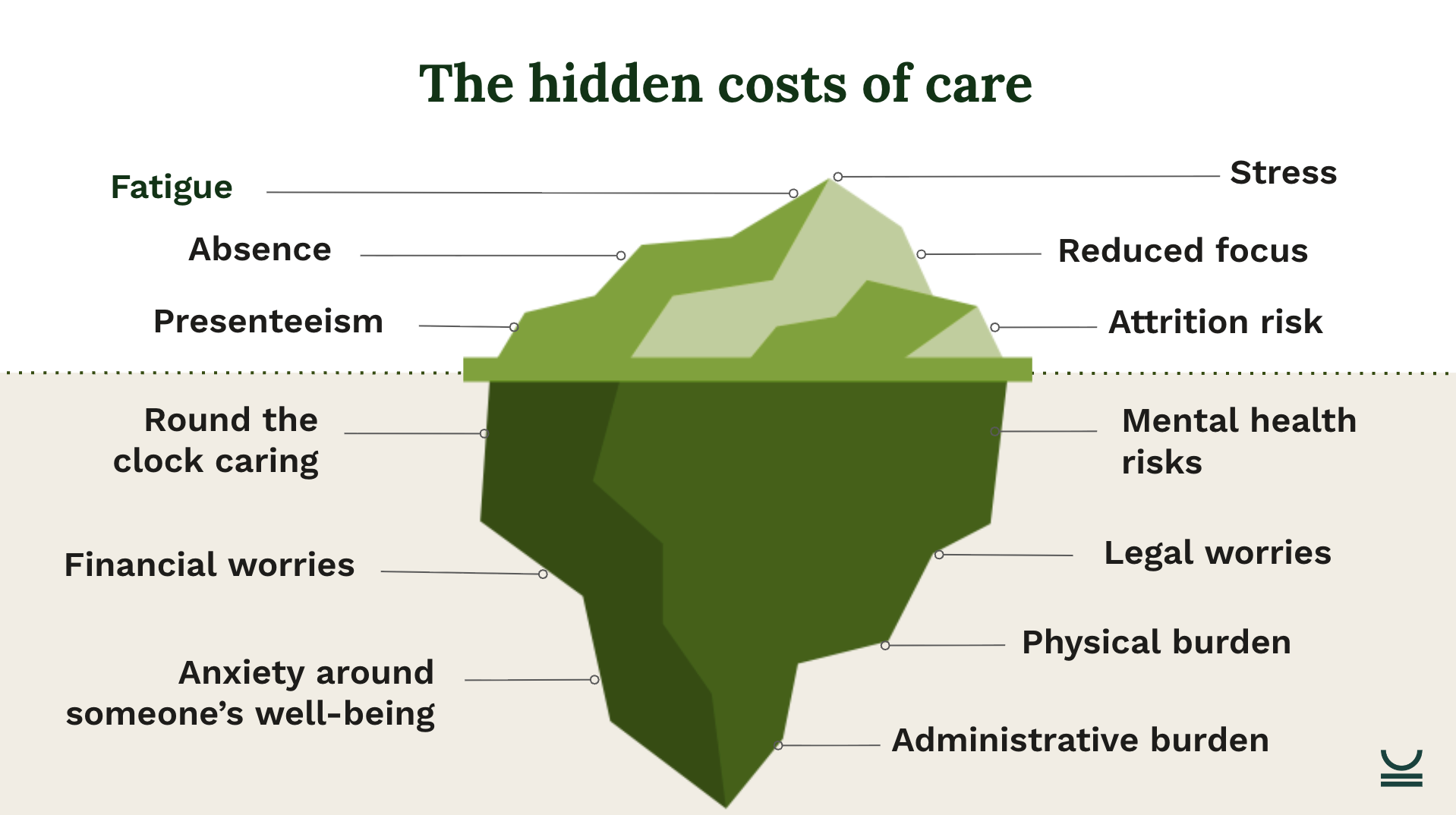
What's actually below the waterline
Presenteeism. Carers are at their desks, but not fully there. 3 in 4 employees who are carers worry about juggling work and caring responsibilities. That's not a productivity problem you'll see on a timesheet, but it's real, and it's constant.
Financial strain. Nearly 2/3 of carers say they're extremely worried about managing their monthly costs, and 1/3 have already cut back on essentials like food or heating. That anxiety doesn't stay at home. It will ultimately show up as distraction, stress, and reduced capacity at work.
Physical and mental toll. On top of working a combined 50+ hours a week, the vast majority of carers report a physical health effect of their own. Add in reduced sleep, cancelled hobbies, and less time with friends and family, and the toll builds fast.
Administrative and legal burden. Navigating care systems, funding, and legal arrangements like Power of Attorney is a second, unpaid job most carers weren't trained for, and most don't know where to start. 3 in 4 say they're lost in the system.
Why this becomes an HR problem.
When care goes unsupported, it doesn't stay contained. It follows a predictable path: an employee becomes a carer, the caring role intensifies, burnout sets in, absence and reduced productivity follow, savings run down, stress escalates, and eventually, the employee leaves the workforce altogether.
By the time that shows up in your attrition figures, the cost has already been paid many times over, in ways your reporting never captured.
A few tips for managers
Managers are usually the first point of contact when someone's struggling, before HR ever hears about it. A few simple steps can make the difference between an employee suffering in silence and getting support early:
- Observe and open dialogue, don't assume. Start with what you've actually noticed, not a guess at what's wrong: "I've noticed you've not quite been yourself recently and wanted to check in."
- Express care and hand over control. Let them decide how much to share: "If something outside work is affecting you, I'm here to listen."
- Point to what's available. Flexibility, HR support, or a service like KareHero: "We have access to support for this, shall I share the details?"
- Agree on the next steps together. This might mean flexible working, or entitlements like unpaid leave under the 2024 Carer's Leave Act.
The goal throughout is psychological safety, calm, non-judgemental language, and clarity about the confidentiality a carer is entitled to.
Measuring below the surface
Tracking sick days isn't enough. Getting ahead of the impact of care means building visibility into how much of the workforce is providing care, equipping managers to spot it, and giving employees somewhere to turn before things reach breaking point.
Because the real question for HR leaders isn't "how much absence is caring responsibility costing us?" It's "how much are we already losing that we can't see?"
This article was originally written by KareHero for REBA.
Ready to learn more about becoming a care friendly business?
Book a call with one of our experts to find out more.
